


Hackers Heat French Supermarket Fridges to 50 °C: Would You Notice?
Monday morning, shortly before opening. The freezers are warm, and the goods inside have thawed. That is how the week began for hundreds of supermarkets in France. Overnight, unknown attackers had taken over the refrigeration controllers remotely. Until now, a cyberattack on refrigeration systems was mostly a topic for security conferences. Since 12 October 2026, it has been reality, and it is expensive.
What happened on the night of 11 to 12 October
During the night from 11 to 12 October 2026, attackers manipulated the refrigeration systems of numerous French supermarkets. According to media reports, they triggered the defrost function remotely. As a result, temperatures in fridges and freezers rose to as much as 50 °C.
The attack hit several major chains. Intermarché owner Les Mousquetaires reported around 150 affected stores, and Carrefour reported around 80. Estimates for the total range from several hundred to around 700 stores, depending on the source. Some media also reported fires in individual stores.
The result was the same everywhere. Stores had to throw away fresh and frozen goods. In addition, many retailers now face the question of who pays for the damage.
Why the attackers had an easy job
Many of the affected stores used remote controllers from the Danish manufacturer Danfoss. Danfoss stated that most of the compromised units were older systems that no longer receive security updates or ran outdated software.
However, this is not a single-vendor problem. The French authority CERT-FR also lists remote controllers from Copeland and Dixell in its warning. So the common factor is less the device than the way it is operated. Many maintenance interfaces were directly reachable from the internet.
The timeline is also worth noting. In August, the security firm Claroty had already published research on weaknesses in Danfoss controllers. In other words, the risk was known before anyone exploited it on a large scale.
Why this matters for your business too
The attack hit French retail, but the technology is the same across Europe. Large kitchens, caterers, butchers and bakeries also work with connected refrigeration. Moreover, a refrigeration engineer often set up a remote access that nobody on site remembers today.
In practice, such an access only gets noticed when something goes wrong. That is why it pays to look now, while things are still calm.
The controller can lie, a second sensor cannot
A refrigeration controller manages set points, compressors and defrost cycles. However, its display does not necessarily show how warm it really is at the product. Once someone manipulates the controller, its display loses all meaning as well.
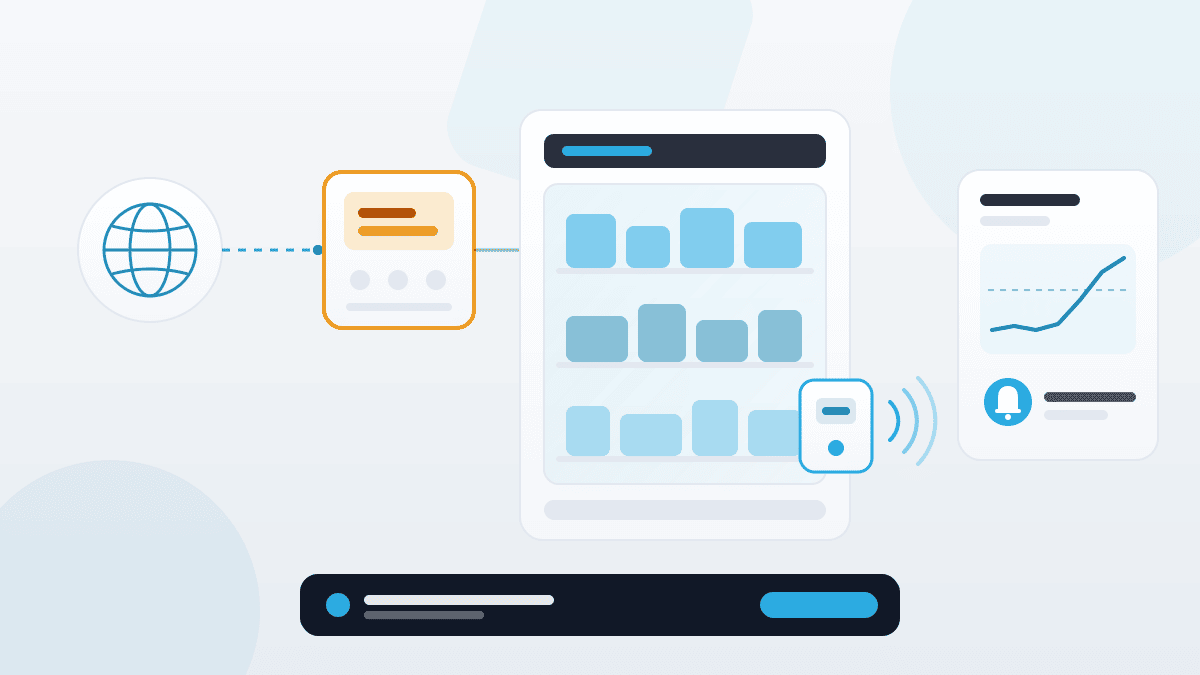
A second, independent measurement closes exactly this gap. The wireless sensors of the QMSpot sensors and temperature monitoring module measure separately from the refrigeration controller. They send their data over their own radio link to a gateway and store every value with a time stamp.
For each measuring point, you set an upper and a lower alarm limit. If a value crosses the limit, your team receives a message by email or in the app. It makes no difference whether a hacker, a faulty compressor or an open door is behind it.
What if someone attacks the sensor?
A monitoring system must not become a new entry point itself. For that reason, we protect every measurement along its whole path, from the sensor through the cloud to your dashboard.
One-way radio. The sensors send their readings in one direction only, to the gateway. They are not connected to your refrigeration controller.
Encryption. The gateway forwards the data to the cloud in encrypted form. There, the data is also encrypted at rest and hosted in the EU.
Controlled access. Role rights, automatic log-out and a tamper-proof audit log limit who can see and change what.
External testing. QMSpot is certified to ISO/IEC 27001. In addition, an independent penetration test of the sensor cloud web application took place in April 2026.
What CERT-FR recommends to operators
CERT-FR, the incident response centre of the French cyber agency ANSSI, published its CERT-FR security alert on attacks against refrigeration controllers (in French) on 12 October and updated it the next day.
First, operators should remove any internet exposure of the affected units and of all units on a public IP address. Second, they should check the complete configuration, in particular the defrost schedules. Third, they should update the firmware, change default passwords and use the strictest security settings available. For units that show signs of compromise, CERT-FR recommends a factory reset and a fresh configuration.
CERT-FR also points out that a reset alone does not remove the weakness. A device without security updates that stays online is very likely to be compromised again. Before you cut a data link to your service provider, check your insurance terms as well.
This sounds like a job for IT. In practice, though, you clarify it with your refrigeration engineer in a short meeting. The question is simply which remote accesses exist and who uses them.
What food law says
For the food inspector, it does not matter why the refrigeration got warm. Regulation (EC) No 852/2004 requires that the cold chain is not interrupted.
For quick-frozen food, there is a second rule. Commission Regulation (EC) No 37/2005 on monitoring temperatures of quick-frozen foodstuffs requires recording instruments in transport, warehousing and storage that comply with EN 12830. Operators must keep the dated records for at least one year, or longer depending on the shelf life of the products.
What you need to document
Temperature history per cold spot. Complete, time-stamped and recorded independently of the refrigeration controller.
Alarm limits. Defined and justified for each measuring point, for example by product group.
Alarm response. Who received the alarm when, and what the team did next.
Products after a deviation. Which products your team blocked, assessed or discarded. With the QMSpot defect management module, this decision links directly to the alarm.
Remote accesses. A list of all accesses to the refrigeration system, with service provider, purpose and date of the last check.
Updates and maintenance. When your engineer last updated and serviced the controller, recorded for example in the QMSpot device management module.
Calibration of measuring equipment. Evidence that your measuring instruments meet the required standard.
Frequently asked questions
Does QMSpot detect a cyberattack on my refrigeration system?
No, QMSpot does not detect cyberattacks. However, it reliably reports when a measured temperature crosses a defined limit, whatever the reason.
Does the measurement work independently of my refrigeration controller?
Yes. The wireless sensors measure separately from the controller and send over their own radio link. So if the controller fails or someone manipulates it, the measurement continues.
Does QMSpot replace my refrigeration controller?
No. The controller continues to run your system. QMSpot, by contrast, monitors, alerts and documents as a second, independent instance.
Can I connect existing sensors from other manufacturers?
In many cases, yes. QMSpot already works with data loggers and wireless sensors from various manufacturers. We clarify whether your model fits on a case-by-case basis.
How to get started
Tomorrow, call your refrigeration engineer. Ask which remote accesses to your refrigeration system exist and whether they are reachable directly from the internet. The answer shows you at once how big your risk is.
Then check whether your most important cold spots have an independent measurement. Start with the freezers and the cold room with the most valuable stock. That is where the damage is greatest in an emergency. For retail sites, the page on quality management software for retail shows how this works across many stores.
Would you notice if your refrigeration switched to defrost tonight?
Then let's talk briefly about your business and see how you can secure cold spots, alarm chains and temperature records with QMSpot, independently of the refrigeration controller.