


HACCP in Hotels: Breakfast Buffet, Room Service, Minibar
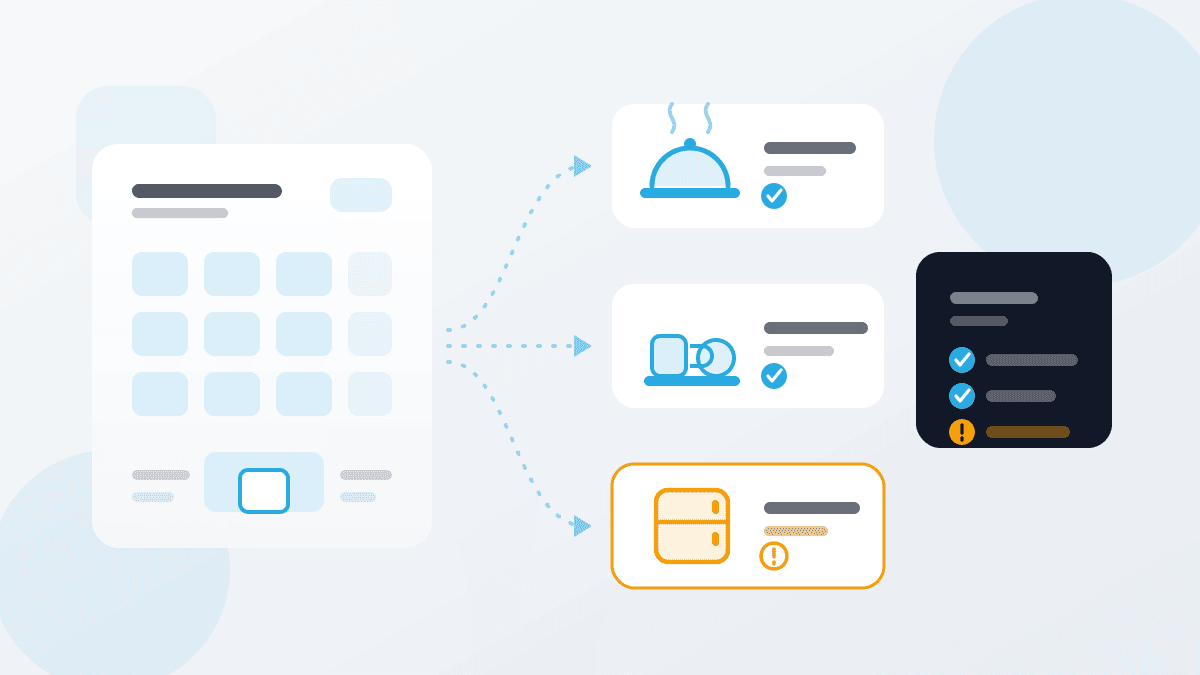
A restaurant has one kitchen and one pass. A hotel, by contrast, has a breakfast buffet, room service, minibars, banqueting and a bar that a receptionist runs at night. That means five service points, different times and changing staff. Yet in most cases, the hygiene plan only covers the kitchen. That gap is exactly where HACCP in hotels runs into problems during inspections.
Why a hotel is not a restaurant
Three things make the difference.
Food leaves the kitchen. Once food stands on the buffet, travels in the lift or sits in a room, no trained kitchen staff supervises it any more. Even so, the responsibility stays with the business.
Guests serve themselves. At the buffet, the guest becomes part of the process, and the only person involved whom you cannot train. You can only manage this through layout and organisation.
Staff rotate across departments. Seasonal workers, temps and receptionists take over the bar in the evening. So if you only train the kitchen brigade, you reach just a fraction of the people who actually handle food.
In legal terms, this changes nothing about the duties. Regulation (EC) No 852/2004 on the hygiene of foodstuffs applies to every area where your team handles or serves food. It only changes how many areas your plan has to cover.
The five food areas in a hotel
Breakfast buffet
This is the area with the highest risk and the longest display time. Four points are critical: the serving temperature of chilled and hot-held items, the sneeze guard, refilling and the total display time.
When refilling, teams break one rule more often than any other: replace, do not top up. Pouring fresh food onto food that has already been out extends the display time of the bottom layer without anyone noticing.
Room service and floor service
Between kitchen and room lie the lift, the corridor and waiting time. At night, there is often nobody with kitchen training in the building.
A practical approach is a time limit instead of measuring every tray. Define the maximum time between plating and handover, and what happens if it takes longer. For hot dishes, 15 to 20 minutes with a cloche and a warmed plate have proved realistic in practice. For longer routes, you need insulated boxes or a reduced night menu.
The night menu is the most effective lever anyway: a cold menu with packaged components means less risk and fewer records.
Minibar
Hygiene plans almost always forget the minibar, although it stores and supplies food. Three points need rules.
Temperature. Minibar fridges are often weak absorption units. In summer, they frequently fail to reach their target temperature. A spot check per floor and month shows whether this is a problem.
Date checks. Define who checks the dates, how often and how you record it.
Returns. Opened products never go back into stock.
Banqueting, meetings and coffee breaks
This is the underestimated area. Food stands in rooms without chilling or supervision, often for the entire break, and breaks overrun.
Here, only a clear rule per set-up helps: when the team set it up, when it clears it and what it replaces in between. A note on the set-up with the time is the simplest solution that actually works.
Bar and night shift
Ice, garnishes, open milk and snacks are all food, often handled by staff without kitchen training. Ice from the machine is the classic case, scooped with a scoop that nobody cleans.
Where hotel hygiene plans typically have gaps
The plan ends at the kitchen door. Buffet, floors, minibars and banqueting do not appear in it. Formally, there is then no procedure for these areas.
Only temperatures, no display times. A reading of 6 °C says nothing if the platter has been out for three hours.
Cleaning records for the kitchen only. Buffet equipment, ice machines, coffee machines, beer taps and minibars are missing from the cleaning plan.
Training for the brigade only. Nobody trains the service, reception and housekeeping staff who help out at the buffet, although they handle food.
What you need to document
As everywhere, records must suit the type and size of the business and be ready to show. For a hotel, that means six records.
Goods-in. Temperature checks for chilled and frozen deliveries.
Fridge and freezer temperatures. All units in the kitchen, bar and buffet stations, with spot checks on minibars. Across many floors, manual readings are hardly sustainable. The QMSpot sensors and temperature monitoring module takes over this part and logs it without gaps.
Serving temperatures and display times. For the buffet and for banqueting set-ups.
Cleaning and disinfection. For every area where staff handle or serve food, including equipment.
Training. For all staff with food contact, not only the kitchen.
Deviations and corrective actions. The record inspectors miss most often and look at most closely, kept for example in the QMSpot defect management module.
To make this work the same way across all areas, you need one consistent inspection plan instead of five forms that grew over time. The QMSpot checklists and inspection plans module shows how to structure it.
Training seasonal and rotating staff
The real hotel problem is not the regulation but staff turnover. If you train in March and have twelve new temps in June, you have no records by July.
Three things make it manageable. First, a short basic briefing that every new person gets before their first shift. Twenty minutes are enough if they are tailored to the area. Second, an area briefing for each station instead of one training for everything. Third, records that show at once who is still missing, so you do not rebuild them from lists once a year. The QMSpot training and instructions module is built for exactly this.
Annex II of Regulation 852/2004 also requires training in food hygiene according to each person's work. National guides to good hygiene practice for hospitality provide a good basis.
When something does go wrong
Clusters of stomach illness among guests are often caused by norovirus. According to the ECDC disease information on norovirus, the virus is highly contagious and survives long on surfaces. ECDC recommends avoiding food handling with gastrointestinal symptoms and staying away for at least 48 hours after symptoms end.
In practice, anyone who reports sick does not touch food, not even briefly at the buffet. And you define this procedure in advance, not during the outbreak.
Frequently asked questions
Does a hotel without its own restaurant need a HACCP plan?
Yes, as soon as it supplies food. That already applies to a breakfast buffet, stocked minibars or meeting catering. The scope depends on the type and size of the business. With packaged food only, the plan is much leaner, but you cannot drop it.
Does the minibar belong in the hygiene plan?
Yes, because it stores and supplies food. You need rules on chilling, date checks and returns.
Do service and reception staff need training?
Yes, anyone who handles perishable food needs appropriate hygiene training, including buffet, bar and night staff. The training can be short, but it must take place and you must document it.
How long may the breakfast buffet stay out?
What counts is not the opening time but the display time of each item. In practice, three hours have become established as an upper limit, provided chilling or hot-holding temperatures are kept throughout. With longer breakfast times, you therefore replace instead of refill.
How to get started
Walk through the building once and note every place where food stands, is served or stored: kitchen, buffet, bar, banqueting corridor, floor pantry, minibars and ice machines. In many hotels, this adds up to eight to twelve places, and several of them are missing from the existing plan.
For each of these places, define who is responsible, what the team checks, how often, which limit applies and what happens in case of a deviation. Afterwards, you have a complete map that holds up at night and in high season. To see how this comes together in one system, take a look at QMSpot quality management software.
Do you know how many places in your hotel serve food?
Then let's talk briefly about your property and see how you can bring buffet, floors, minibars and banqueting together in one plan with QMSpot.